
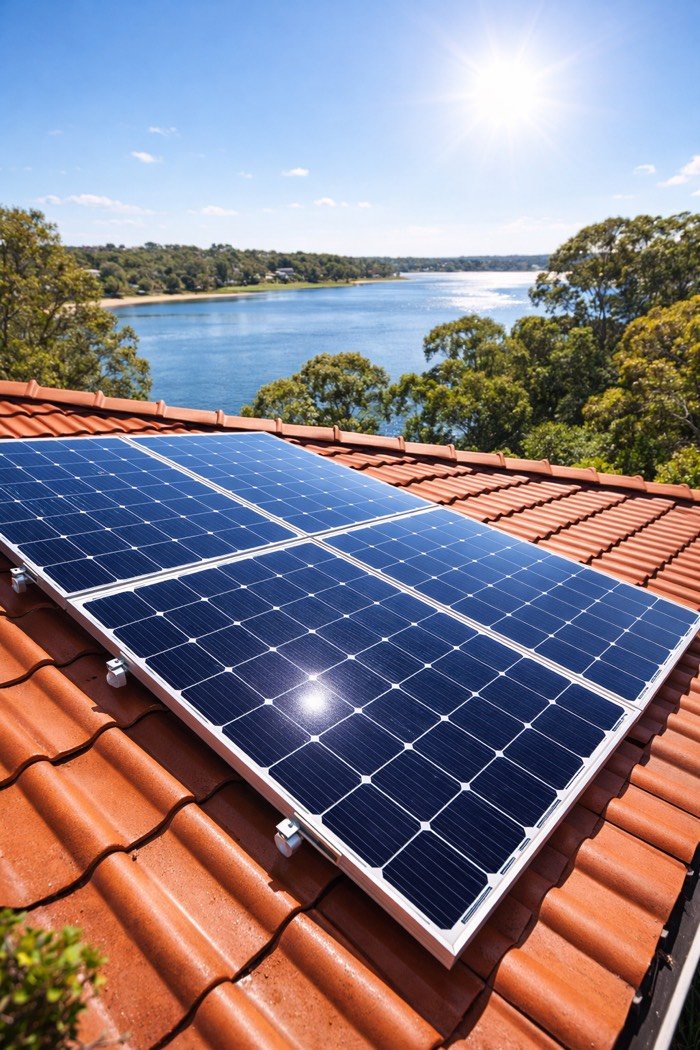
If your home is anywhere near the estuary or the coast, your solar panels are working in one of the harshest spots for grime: salt spray off the water plus fine airborne dust, settling day after day. It doesn't wash off cleanly in the rain, and it steadily eats into what your system produces.
How much output do dirty solar panels lose?
Soiling losses vary with how dirty the panels get, but coastal and dusty sites are consistently at the worse end because the build-up is heavier and stickier. Salt film is the real culprit — it's slightly tacky, so it holds dust rather than letting it blow off. The result is a gradual drop you won't notice on any single day, but that shows up over a quarter on your bill.
Why is the coast worse than inland?
- Salt film from onshore breezes leaves a sticky residue rain can't fully clear.
- Fine dust and pollen bond to that film instead of blowing away.
- Low winter sun angles mean any film across the glass costs proportionally more output.
Rain rinses loose dust. It does not remove salt film — which is exactly the build-up that costs coastal homes the most.
How often should coastal solar panels be cleaned?
For most Peel-region homes, a proper clean once or twice a year keeps output where it should be. Homes right on the water, near unsealed roads, or under trees may want it more often. The honest answer is that it depends on your spot — but "never" is the wrong answer near the coast.
Is it safe to clean them yourself?
Getting on a tiled or two-storey roof with a hose is how people get hurt, and the wrong brushes or chemicals can scratch panels or void warranties. We clean from the roof safely using the same rope-access care as our tree work, with methods that lift salt and dust without harsh chemicals.
Want your panels looked at? Send your details or call 0475 707 689 for a free quote.